Put a Break-Even Point on a Perfume Pop-Up Table
A busy holiday calendar can make a small perfume pop-up feel like an obvious opportunity. Before paying for a table, write down how many completed orders would cover the event's incremental costs. The calculation will not forecast attendance, but it can tell you what kind of result the plan actually needs.
Published 2026-11-27 · Fragrentis editorial team2 min read
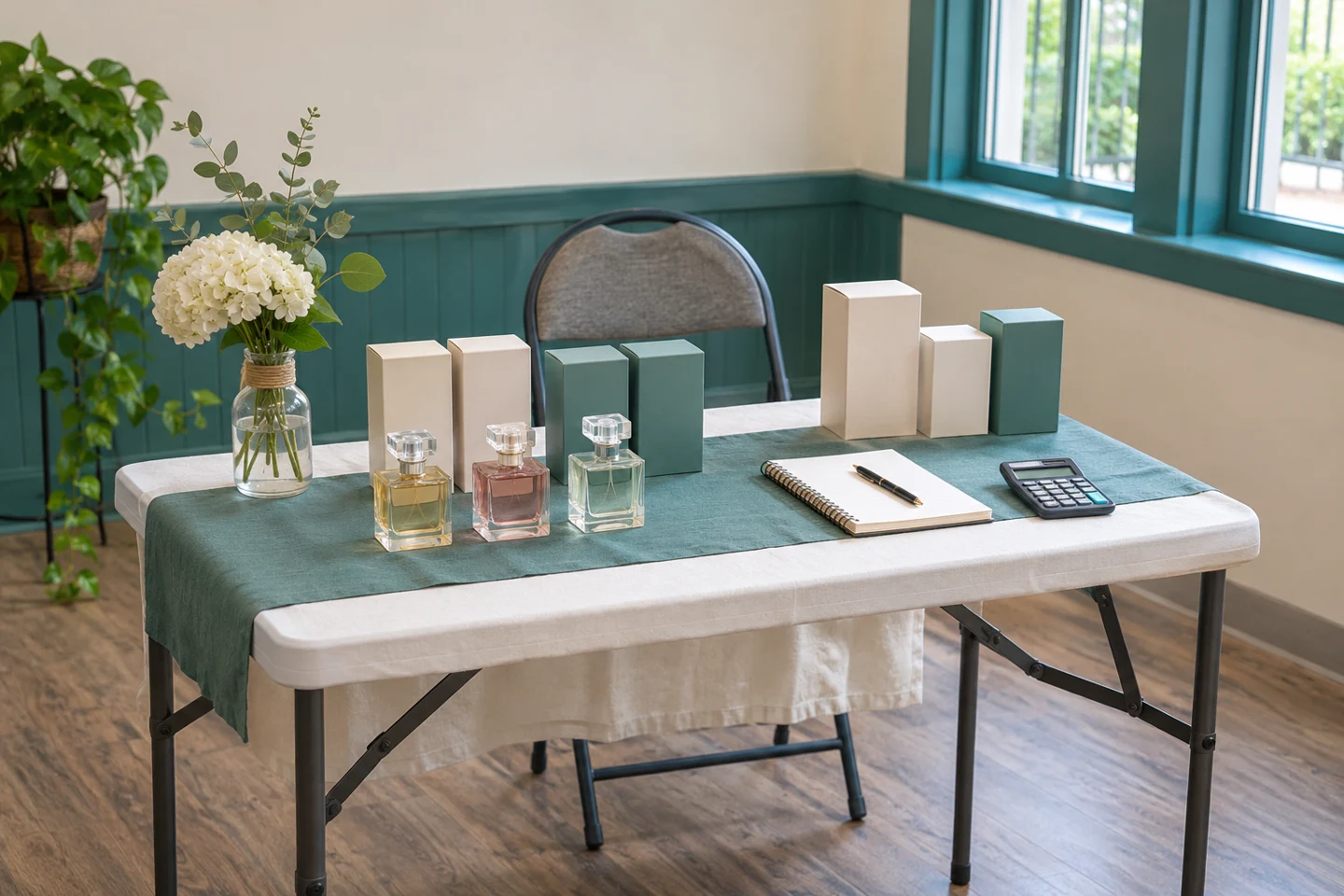
A busy holiday calendar can make a small perfume pop-up feel like an obvious opportunity. Before paying for a table, write down how many completed orders would cover the event's incremental costs. The calculation will not forecast attendance, but it can tell you what kind of result the plan actually needs.
Separate the market backdrop from your event
Circana's November 12, 2026 US beauty release reported prestige fragrance dollar sales up 5% through September, with mass fragrance dollars up 15%. Its holiday outlook was positive about fragrance and gifting. Those channel-wide figures support a promising context; they do not measure the audience, traffic or conversion rate at your particular table.
Ask the organizer what can actually be substantiated about the event, its audience and the facilities included. Keep estimates labelled as estimates. A large attendance claim does not become a perfume-order forecast simply by multiplying it by a hopeful percentage. The costs are committed even when the crowd does not match the plan.
Work backward from contribution
Invented US-dollar example: the venue fee is $180. Your average completed order is expected to leave $12 after the relevant variable costs, including product, packaging and payment charges. The event break-even order count is $180 ÷ $12 = fifteen orders. That result assumes the contribution estimate holds and excludes costs not yet entered.
Now add $60 of incremental staffing cost. The event cost becomes $240, so the threshold rises to twenty orders. Revenue alone cannot answer the question: twenty orders with $12 contribution are different from twenty orders with $6. If contribution is only $6, covering $240 requires forty orders. Check the product mix behind the average rather than assuming every basket is alike.
Use whole completed orders when interpreting the threshold. If division gives a fraction, the next whole order is needed to cover the cost under the stated assumptions. A deposit, a browsing conversation and an unfinished cart are not interchangeable with completed orders. Avoid counting them together to make the event look closer to break-even.
Test the downside before committing
Put a lower-sales case beside the target. Ten orders at $12 contribution provide $120 against $240 of incremental cost, leaving a $120 shortfall before any wider business overhead. That is not automatically a reason to reject the event, but any separate learning or marketing objective should be explicit rather than disguising the financial result.
Also check whether leftovers can return to normal stock, whether staffing is practical and whether the chosen range fits the event. Confirm applicable venue and selling requirements with the appropriate sources before committing; this article does not establish them. A growth opportunity is stronger when the cost ceiling and the conditions for success are clear.
Fragrentis publishes this journal and operates the linked store. Review the publisher’s catalog and bulk-order information for a real cost worksheet.
The publisher's catalog and bulk-order page can help define a real assortment and its purchase cost. Its terms are not the invented resale economics above. Use actual quotes and current shipping charges in your own worksheet. Market release and publisher terms checked November 27, 2026; no event sales or conversion results are claimed.
A Fragrentis editorial publication. Editorial policy and disclosure.