Beauty Sales Can Grow While Your Counter Still Needs a Break-Even Plan
Use current retailer reporting as context, then calculate the economics of your own fragrance display.
Published 2026-10-16 · Fragrentis editorial team2 min read
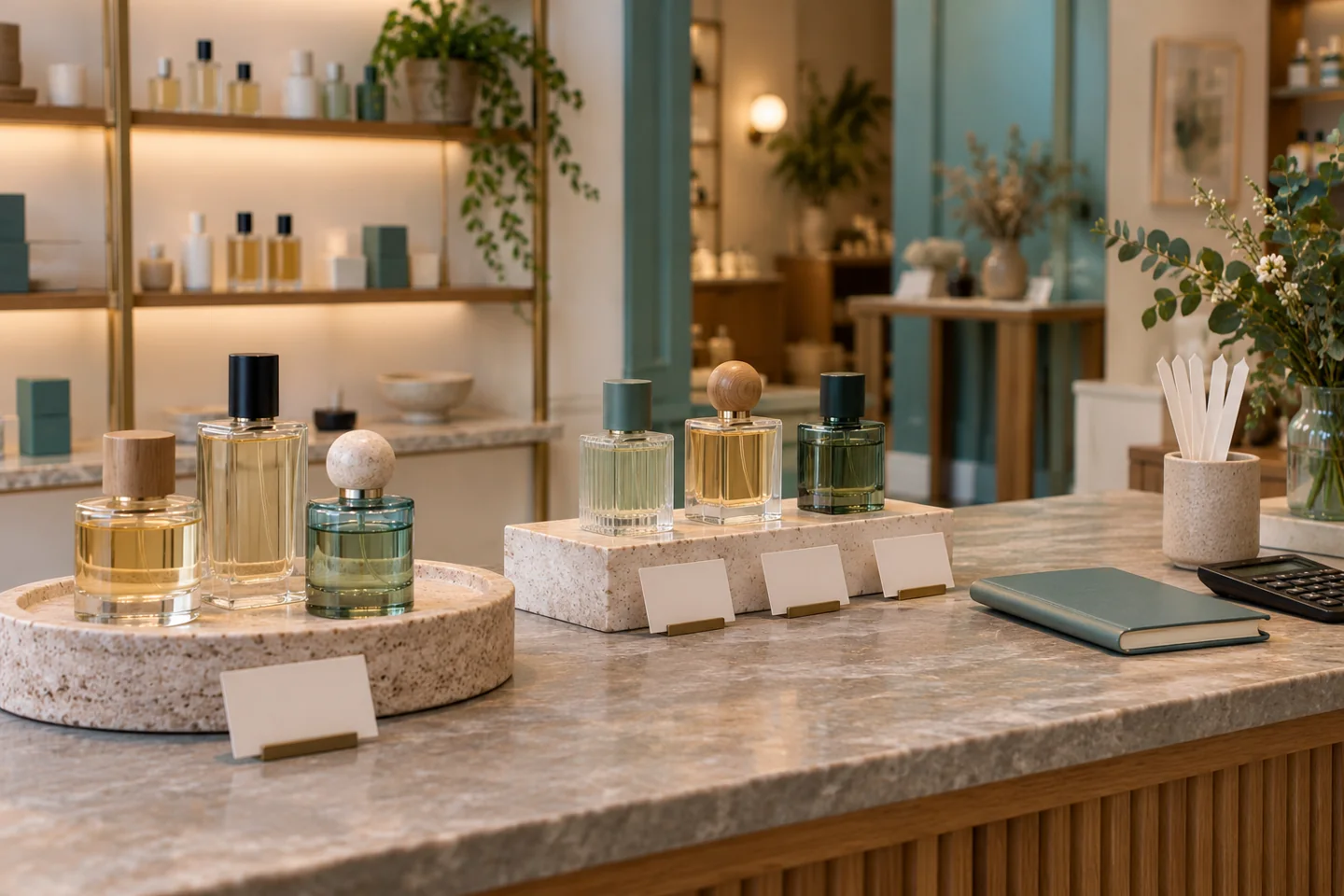
A growing beauty market can make a small fragrance display worth exploring. It cannot tell you how many bottles your own counter needs to sell. Separate the encouraging signal from the operating calculation.
What the retailer reported
Ulta Beauty’s August 27 release reported consolidated fiscal second-quarter 2026 net sales of about $3.0 billion, up 8.9%, and comparable sales growth of 3.8%. The period ended August 1. Acquisition and new-store contributions helped total growth, so the two percentages answer different questions.
These are broad beauty-retailer figures, including the consolidated business, not a measure of fragrance-only demand or an independent store’s local market. Gross profit as a share of sales was 39.1%, against 39.2% a year earlier. Growth and slight margin pressure can happen together. These dated results are the context checked for this article, not a live October sales reading.
Calculate a counter’s break-even point
Break-even units = incremental fixed costs ÷ contribution per bottle, rounded up to a whole bottle.
In an invented monthly US-dollar example, the display adds $300 of fixed costs. Each sale produces $12 after the landed bottle cost and variable selling costs. You need 25 bottles to cover those incremental fixed costs: $300 ÷ $12 = 25. At 20 bottles the contribution is $240, leaving a $60 shortfall. At 35 bottles it is $420, leaving $120 before any costs omitted from this model.
This is not net profit for the whole store. Include additional staffing if the display creates it. Avoid charging existing overhead twice when measuring an incremental project, while still checking whether the entire business covers its overall expenses. Keep both views visible.
Build the positive case from a customer task
A small counter can offer something concrete: understandable product identities, a manageable comparison, clear volume information and reliable follow-through. The opportunity is helping a customer make a confident decision rather than showing the largest possible range.
Give a trial display a fixed review date and record visits, genuine sales and contribution. Do not count interest or a national retailer’s growth rate as your own revenue. If people ask the same unanswered question, improve the explanation before expanding the assortment.
The favorable scenario requires sufficient local demand, controlled landed costs and enough contribution after discounts and variable costs. Slower foot traffic, returns and stock that does not move can defeat it. Test a lower-sales case alongside the target. That makes the optimism usable: an opportunity with conditions you can monitor, rather than a promise that the category only rises.
Sources and scope
- Ulta Beauty: Second-quarter fiscal 2026 results. Released August 27, 2026; thirteen weeks ended August 1, 2026. Consolidated retailer results, not fragrance-only or US-only sales. Accessed October 16, 2026.
A Fragrentis editorial publication. Editorial policy and disclosure.