How to Organize a Small Fragrance Display
Organize a small shelf around readable information, separate testers and a useful question log.
Published 2026-10-14 · Fragrentis editorial team
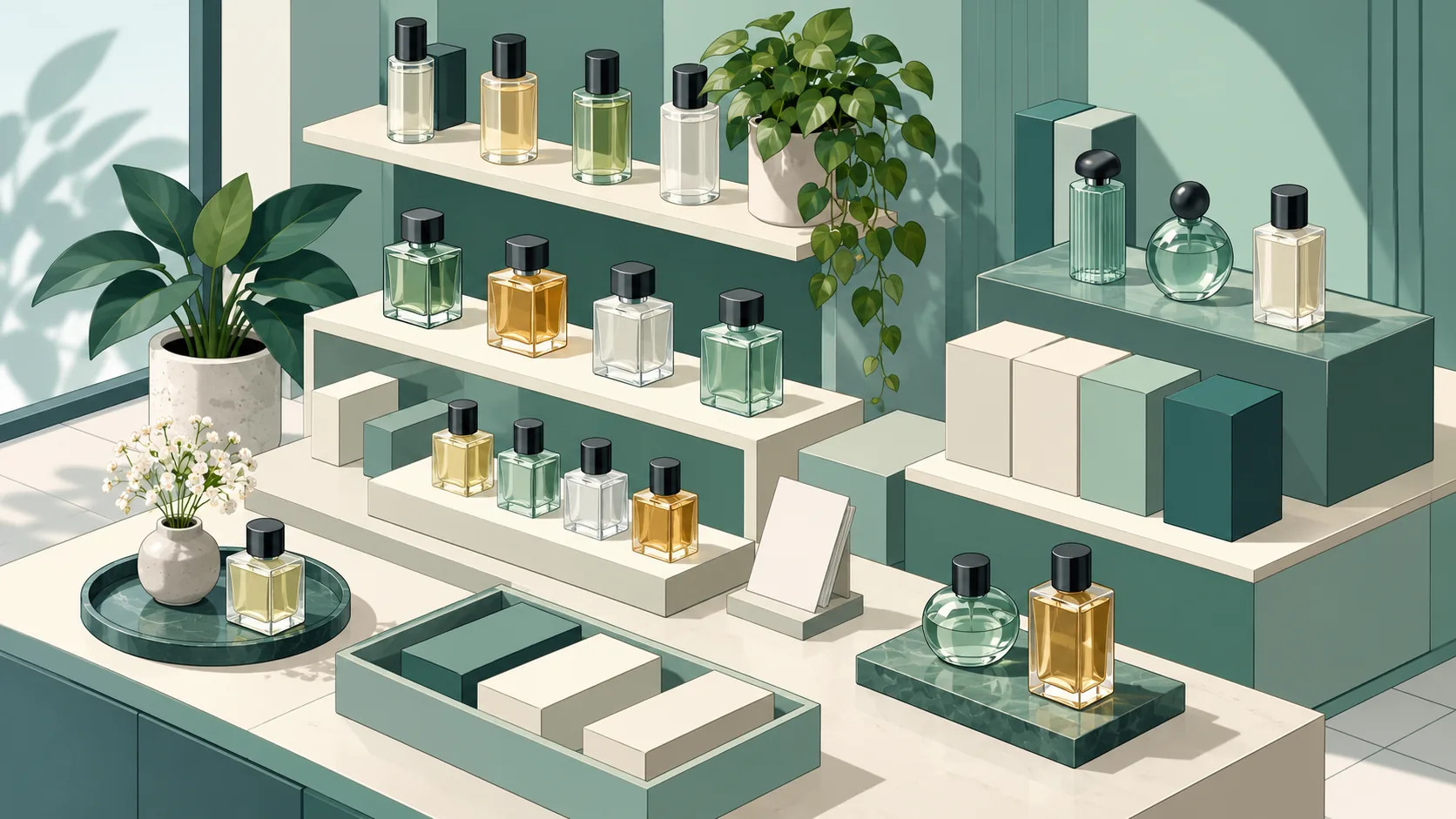
A small fragrance display works when a visitor can understand what is available without moving every bottle. More products do not automatically create more choice. Start with the path from seeing the display to identifying an item, reading its information and asking a useful question.
Give the shelf one organizing idea Choose an arrangement you can explain simply: bottle format, a few descriptive scent directions, or a small current selection. Avoid presenting an assortment of independent products in a way that implies it is an authorized display of another brand. Product identity should remain readable beside the attractive presentation.
Keep price, volume and quantity information close to the relevant product. If a set contains several bottles, make the contents explicit. Grouping by a descriptive direction is a merchandising choice, not a promise that every customer will perceive the fragrances identically. Leave enough room for cards to be read without lifting stock.
Separate testing from saleable goods Identify testers clearly and give them a defined place. Keep blotters, if used, tidy and make it easy to label a candidate. Do not count a tester as saleable inventory simply because it is physically on the shelf. Maintain the product's use instructions and any relevant store rules for sampling.
An invented compact layout uses three zones: a short introduction at the left, three featured products in the center and clear price and product information alongside them. Testers sit in a separate marked position. This is an arrangement to evaluate, not evidence that a particular layout increases sales by a measurable percentage.
Walk the display as a customer Stand at the normal approach point and ask whether you can identify the offer. Then move closer and check the smallest information card. Inspect glare, crowded labels and any shelf position that encourages bottles to be knocked over. Avoid a sunny window or heat source as a permanent display spot when it conflicts with the maker's storage guidance.
For one week, keep a question log without collecting unnecessary personal information. Record which details visitors repeatedly ask for and which cards they overlook. Use that evidence to improve the display. If the same question about quantity or product identity keeps arising, the answer probably needs a better position rather than a more decorative prop. A useful display reduces uncertainty while keeping the merchandise safe and the assortment understandable.
A Fragrentis editorial publication. Editorial policy and disclosure.