How Many Extra Sales Would Pay for a Dedicated Tester?
A fragrance tester earns its place when it helps customers make a decision and the extra sales cover the cost of providing it. A busy beauty market can make the idea worth testing. A store still has to measure what happens at its own counter.
Published 2026-11-11 · Fragrentis editorial team2 min read
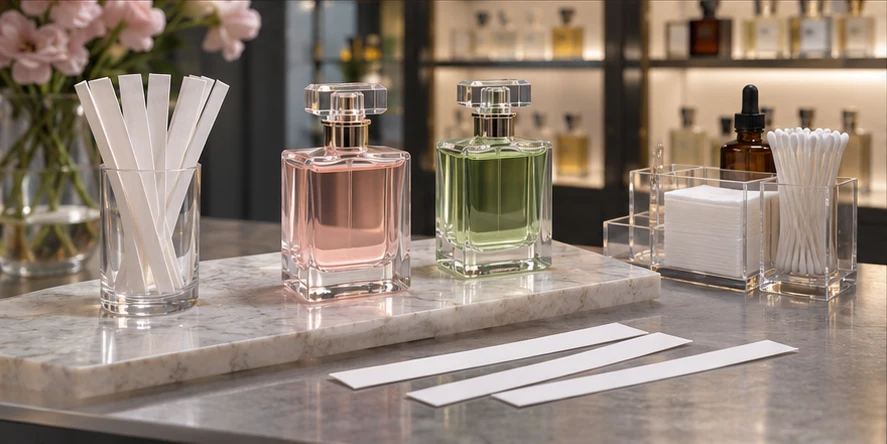
A fragrance tester earns its place when it helps customers make a decision and the extra sales cover the cost of providing it. A busy beauty market can make the idea worth testing. A store still has to measure what happens at its own counter.
Use retail news as context
In its August 27, 2026 earnings release, Ulta Beauty said quarterly net sales rose 8.9% to about $3.0 billion. The period ended August 1. The company attributed growth to comparable sales, the Space NK acquisition and new stores. The figure covers the whole company, with no estimate of the sales lift from a tester at an independent fragrance shop.
Set a break-even target you can count
In an invented US example, a retailer spends $30 on a tester bottle and $10 on strips, cleanup and incremental staff time. The total test cost is $40. If a completed sale leaves $8 after the bottle and direct selling costs, the display needs five extra completed sales to break even on that expense. At three extra sales, the contribution is $24 and the test remains $16 short before fixed overhead.
Decide what counts as an extra sale. Compare a defined test period with a reasonably similar period, and record changes in price, traffic and availability. Count returns consistently. A notebook near the register can document how many customers asked for help, sampled the item, and completed a purchase. It will not establish causality on its own, but it can help you decide whether the experiment deserves a repeat.
Keep the station manageable
Give staff a clear place to put used strips and a predictable way to replenish supplies. Try one item or a small group where shoppers regularly ask to compare descriptions. A focused station can make that comparison easier if the products remain in stock and staff can maintain it. If you see more sampling without more sales, review the selection and the handoff to the register before expanding the footprint.
Check the arithmetic again at the end of the period. A staff member covering a quiet shift may record more sampling conversations than one working through a queue. Use the notes to understand when the station was actually available.
Fragrentis publishes this article and operates an independent inspired-fragrance catalog. The tester example uses hypothetical store costs.
A Fragrentis editorial publication. Editorial policy and disclosure.