A Tester Belongs in the Cost Plan Before It Opens
Separate demonstration stock from saleable units and calculate what a tester needs to contribute.
Published 2026-10-23 · Fragrentis editorial team3 min read
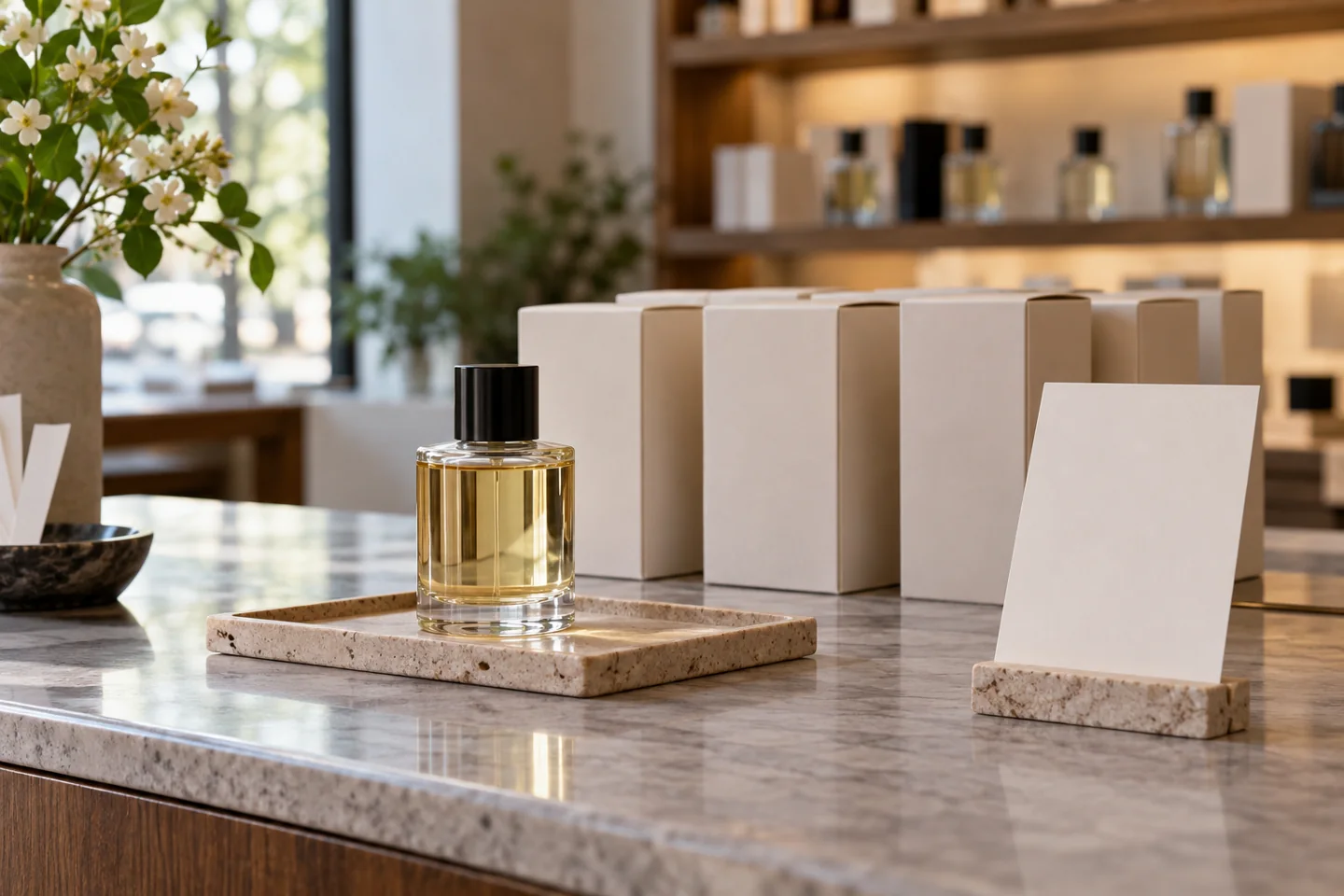
Opening a tester is a small physical action with two business consequences. One unit is no longer ordinary saleable stock, and its cost now supports demonstration. If the inventory sheet records neither change, the shelf count and the margin plan can both become confusing.
Give the tester an identity before using it. Then decide what you expect it to achieve and how you will review that expectation.
Read retail growth at the right scale
Ulta Beauty's August 27,2026 release reported net sales growth of 8.9% and comparable-sales growth of 3.8% for the thirteen weeks ended August 1. The company identified several drivers, including its Space NK acquisition. These are consolidated retailer results, checked on October 23, not US perfume-only growth rates or a forecast for an independent counter.
The encouraging interpretation is that beauty retail continues to offer opportunities for discovery and service. For a small fragrance seller, the opportunity still has to survive local demand, demonstration costs and actual order contribution. A larger company's results cannot tell you how many of your testers will produce sales.
Give demonstration stock a separate record
Record the exact item and the date it moved out of saleable stock. Use the actual acquired cost for your internal plan. Keep usage and replacement decisions visible so that a tester does not appear later as unexplained missing stock.
This is an operating record, not a statement of the tax or accounting treatment required for every business. Follow the rules that apply to your own records and obtain appropriate advice when that classification matters.
A small contribution calculation
Invented US-dollar planning example: a demonstration bottle costs $18 and a tray plus printed information costs $12. The total demonstration outlay is $30. Assume, solely for this example, that an additional completed order leaves $10 contribution after the costs included in your calculation.
Orders needed to cover the outlay = demonstration cost ÷ contribution per additional order.
Here that is $30 ÷$10 =3 additional orders. If actual contribution is only $6, the calculation becomes 5. These are hypothetical figures, not Fragrentis prices, a typical conversion rate or a guarantee of incremental sales. Include any omitted payment, fulfillment, returns or other relevant costs before using a real contribution figure.
Do not count every nearby sale as incremental
A customer who would have bought anyway is not proof that the tester created an extra order. Record observations carefully and distinguish “used the tester” from “would not have purchased otherwise.” If you cannot establish the second claim, do not present it as measured uplift.
You can still run a practical review: did the tester help answer questions, did the stock record remain accurate, and is replacement justified by the business evidence you actually have? Those questions are more useful than assuming a demonstration bottle pays for itself automatically.
Keep growth conditional and useful
Discovery can support a good retail experience when the product information is accurate, the customer has room to choose and the resulting orders leave contribution. Low demand, unnecessary replacements or thin margins can undo that benefit. A clear cost plan lets you explore the opportunity without confusing activity with profit.
Before opening the next bottle, assign it to demonstration stock and write down the cost you intend to recover. The calculation is modest; the improvement is knowing what happened to both the unit and the money.
Source and editorial notes
Ulta Beauty: Second-quarter fiscal 2026 results. 2026-08-27; thirteen weeks ended 2026-08-01. Accessed October 23,2026. Brand and supplier descriptions are attributed statements, not editorial wear tests. Illustration generated with AI; the bottles shown are generic. No Fragrantica text, ratings or images were used.
A Fragrentis editorial publication. Editorial policy and disclosure.