Build the Shipping Threshold into Order Contribution
Free delivery can support an offer while leaving a real fulfillment bill for the retailer.
Published 2026-10-30 · Fragrentis editorial team2 min read
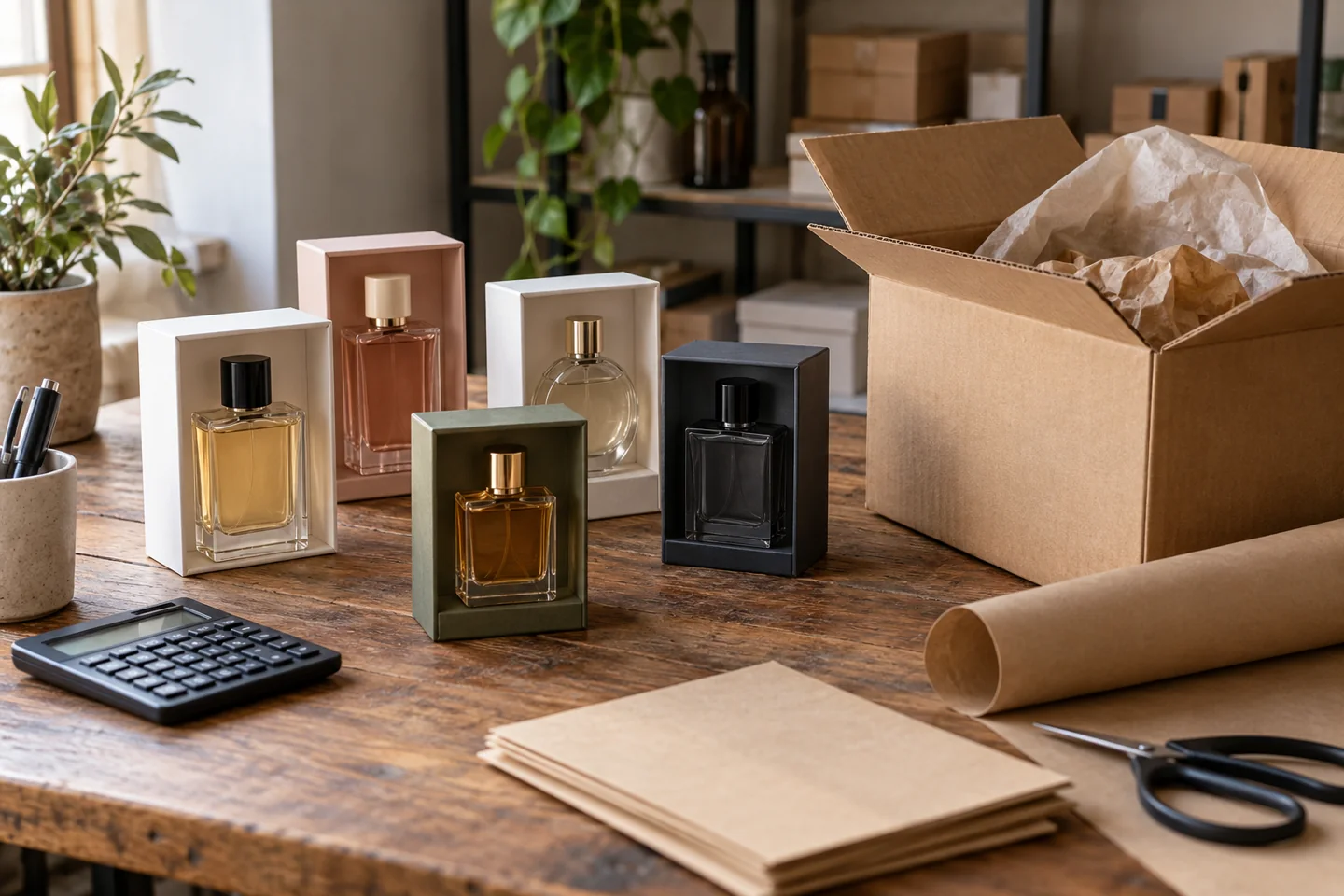
A free-shipping threshold is easy to place in a banner and easy to overlook in a margin sheet. The customer sees a delivery charge disappear. The retailer still needs to pay the actual costs of packing and sending the order. Model that change before treating a larger basket as automatically more profitable.
Keep the customer rule and the cost rule separate
Fragrentis’s current published US policy, checked October 30, 2026, gives free shipping on orders of at least five items and charges $20 per order for one to four items. Each gift set counts as one item. Website and catalog prices match; five items do not trigger an automatic discount. Orders of 50 or more can be discussed with customer service, and manually issued coupons remain separate.
That customer-facing policy does not disclose the store’s shipping cost or margin. The following invented US-dollar example is a planning model only, not Fragrentis financial data, a current product quote or a promise about eligibility for a coupon.
Run both sides of the threshold
Order contribution = merchandise revenue + delivery collected − product cost − actual fulfillment cost − payment fees. For illustration, assume each item sells for $20 and costs $12, outbound fulfillment is $18 per order, and fees are $4 on the smaller order or $5 on the larger one. Taxes, returns, advertising and fixed overhead are excluded.
Four items: $80 + $20 − $48 − $18 − $4 = $30 contribution. Five items with free delivery: $100 + $0 − $60 − $18 − $5 = $17. One extra item can therefore coincide with less contribution in this particular model. Actual results depend on real costs, basket composition and any valid coupon.
Use market opportunity without skipping arithmetic
Circana’s August 11 first-half 2026 US report recorded mass-market fragrance dollar growth of 15% and unit growth of 7%. Prestige fragrance dollars grew 6% while units were flat. Those are different channel patterns for January–June, not October forecasts or evidence of any one store’s conversion rate.
A clear delivery offer can be useful where buyers compare total order cost. Its success still depends on genuine demand, suitable product economics and fulfillment capacity. Higher carrier costs, returns or baskets built only to cross a threshold can weaken the result.
Review actual order contribution by basket size before drawing a conclusion. Track whether the offer brings profitable repeat purchases, rather than counting extra units alone. Explain the item-count rule plainly so a multi-bottle gift set does not create a surprise at checkout. Clear totals help a customer decide; measured costs tell the business whether the offer works.
Source and editorial note
Circana: US beauty first-half 2026 results. August 11, 2026 release; first-half US retail data, not October trading. This is editorial guidance, not a personal wear test. Illustration generated with AI; the bottles shown are generic. The image does not document brand merchandise, a laboratory result or an actual supplier transaction.
A Fragrentis editorial publication. Editorial policy and disclosure.